
The ICA Difference · Company
Occupational medicine is the whole job here, not a side door.
An urgent care treats your injured employee like any other patient who walked in. A hospital treats them like a case number. ICA treats them like someone with a job to get back to — and treats you like the person who needs to know when that will happen.
The premise
A work injury has two patients.
There is the employee, who needs their shoulder looked at. And there is the employer, who needs to know whether that shoulder is coming back to the line tomorrow, on light duty, or not for three weeks — and who is paying for it.
General medicine is built for the first patient only. The visit ends, the note goes in a chart, and the employer finds out what happened when someone forwards a fax. Every day of that silence is a day of guessing at coverage and a day of wage benefits.
We built ICA around both. Same-day treatment, a work status the same day, in-house therapy so recovery does not stall waiting for a referral, and a named contact who picks up when you call.
What that looks like in practice
- Seen the day it happensWalk in at any of our four clinics — no appointment, no triage behind unrelated illness.
- Work status before the shift endsRestrictions written in terms of the job: what they can lift, reach, climb and drive.
- One team through recoveryProvider, physical therapy and case documentation under one roof and one record.
- A person, not a portalYour contact knows your account, your adjuster and what modified duty you actually have.
- Cost managed, not just billedNo facility fees, no imaging by reflex, no visits that exist to fill a schedule.
Side by side
Where your options actually differ
Every option below is a legitimate place to send an injured employee. They are built for different things. Select a row to see why it matters.
Occupational medicine has its own rules: causation, work restrictions, insurer documentation, return-to-work timing. A clinic that also treats strep throat and sprained ankles from the soccer field is fitting your claim into a general-medicine visit. Everyone here does this all day.
Speed matters clinically and legally. An employee seen the same day recovers faster and the claim is far easier to accept. Our clinics take walk-ins during open hours, and the wait is not set by how many unrelated patients arrived first.
This is the single biggest difference employers notice. You get the restrictions in writing before the shift ends, so you can assign modified duty tomorrow instead of paying for time off while you wait for paperwork.
“Light duty” is not a plan. We write what the person can lift, carry, reach, climb and drive, because we have usually seen the job. That is what makes modified duty assignable instead of theoretical.
Therapy that starts within days rather than weeks shortens recovery and shortens the claim. Our PT team works from the same chart as the treating provider, so progress and restrictions stay in sync without a referral loop.
Employers are entitled to work status, and it should not require three calls. You get a person who knows your account and your adjuster — not a general line, and not a records request queue.
Our mobile team can evaluate injuries, run post-incident testing and handle first aid on location. For remote sites and large crews, that removes travel time and often keeps a recordable off the log.
Hiring exams, DOT cards, fit testing, audiograms and surveillance run from the same clinic and the same chart as injury care. Baselines taken at hire are also what make a later claim straightforward.
Colorado workers’ comp forms, causation opinions, MMI and impairment work are routine here. Emergency departments and urgent cares write excellent clinical notes that were never designed to answer a comp claim.
Colorado lets you name providers before an injury happens. We give you the list, the posting, and the authorization contact so the day-of decision is already made.
A hospital visit carries a facility charge on top of the clinical one, and imaging is ordered early because the department is built for the worst case. Same injury, materially different bill.
We are direct about this: for a head injury, major bleeding, chest pain, amputation or anything unstable, call 911. The ER is the right place. We take over the follow-up, therapy and return-to-work side once they are stable.
Comparison reflects how these care settings are typically structured, not a judgement of any individual clinic or hospital. For a life-threatening injury, call 911 — an emergency room is the right choice, and we will pick up the follow-up care from there.
Four commitments
What we hold ourselves to
These are the four things employers tell us they were missing before they moved their care to ICA.
Communication
You are told, not asked to find out
Work status the day of the visit, a call when something changes, and a person who answers when the answer matters.
In practice: Named employer contact per account, and providers who will get on the phone with your adjuster.
Responsiveness
Same-day is the default
Walk-in injury care during open hours, exams scheduled within a day or two, and no queue of unrelated illness ahead of your crew.
In practice: Four clinics taking walk-ins, plus a mobile team that comes to the job site.
Cost management
Fewer visits, less imaging, shorter claims
We treat the injury and the timeline together. No facility fees, no reflexive scans, no appointment that exists to fill a slot.
In practice: In-house therapy that starts in days, and restrictions written so modified duty is actually usable.
Local knowledge
We know the work in this market
Municipal crews, concrete and structural trades, manufacturing floors, drivers, and public safety — across the Denver metro.
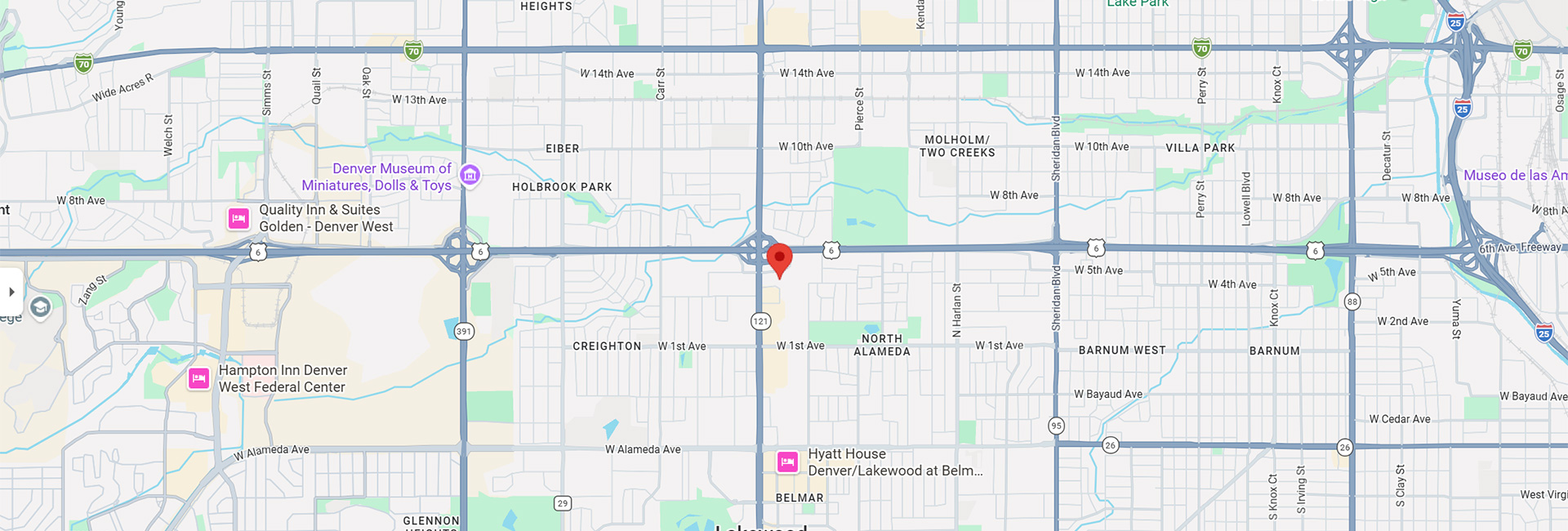
In practice: Denver, Thornton, Parker and Lakewood clinics, all working from one standard and one record.
Where the cost goes
The expensive part of a claim is rarely the treatment.
It is the days away from work, the light-duty role nobody assigned, the therapy referral that took two weeks to start, and the imaging ordered because nobody had time to examine the knee properly.
Occupational medicine done well is mostly about removing delay. That is the discipline this clinic is organized around.
 Where a claim actually gets expensiveThe five delays that drive cost
- Delay one: getting seenWalk-in the same day rather than an appointment next week, at four clinics or on your site.
- Delay two: knowing the restrictionsWork status issued the day of the visit, so modified duty starts tomorrow instead of next Monday.
- Delay three: starting therapyPT in the same building and the same chart — no outside referral, no two-week intake wait.
- Delay four: paperwork the insurer needsComp documentation written correctly the first time, which keeps claims from stalling in review.
- Delay five: reaching someoneA named contact who already knows your account, your adjuster and what duty you have available.
Local, on purpose
Four clinics, one standard of care
Close enough that a supervisor can drive someone over and be back before the end of the shift — and if the drive is the problem, our team can come to the job site instead.
Who sends us their people
Municipalities, contractors and manufacturers across the Front Range
Employers with safety-sensitive crews, regulated exposures, and no appetite for a claim that drifts. Read the case studies →



















Fair questions
In Colorado the employer designates the providers, and you can name them before anyone is hurt. We will give you a designated provider list to post and walk your supervisors through what to hand an employee on the day of an injury.
You are not limited to one. An employee can be treated at whichever of the four clinics is closest, and the chart follows them — including therapy, restrictions and follow-up.
Call 911 for anything serious. For everything else, the triage line and on-site response run 6 a.m.–11 p.m., seven days a week, on every on-site plan, so an evening or weekend injury is covered — see Care Beyond 9-5. 11 p.m.–6 a.m. is not covered; call 911 for urgent injuries.
Many employers do not switch outright — they add us for the parts that were slow: same-day work status, in-house therapy, on-site response, or regulatory exams. Start with the piece that is costing you time.
Urgent care visit rates are competitive, but the cost of a work injury is driven by lost days, repeat visits and imaging. Shortening those is where the savings are, and it is what we are organized to do.
Yes — the major carriers and TPAs operating in Colorado. Tell us your carrier and adjuster when you set up the account and we will route documentation the way they want it.
Next step
Name ICA before you need us.
The employers who get the most out of this are the ones who set up the designated provider paperwork, the authorization contact and the modified-duty list before the first injury — so the day it happens, nobody has to decide anything.
Already sending injuries here? Ask about the designated provider list and on-site coverage for your job sites.