Most common
Minor injury: treated on-site
Cuts, scrapes, minor burns, strains, splinters, eye irritation. The nurse provides first aid at the workplace and the employee returns to work.
No trip, no waiting room, managed for OSHA recordability.
Same-day work injury care, physical therapy, physicals and drug testing — now closer to West Denver employers and crews. Walk-ins welcome, no referral needed.
When a worker gets hurt, one phone call reaches a Registered Nurse who decides the right level of care and, when first aid is appropriate, brings it to your jobsite. Here’s exactly what happens.
When an injury happens
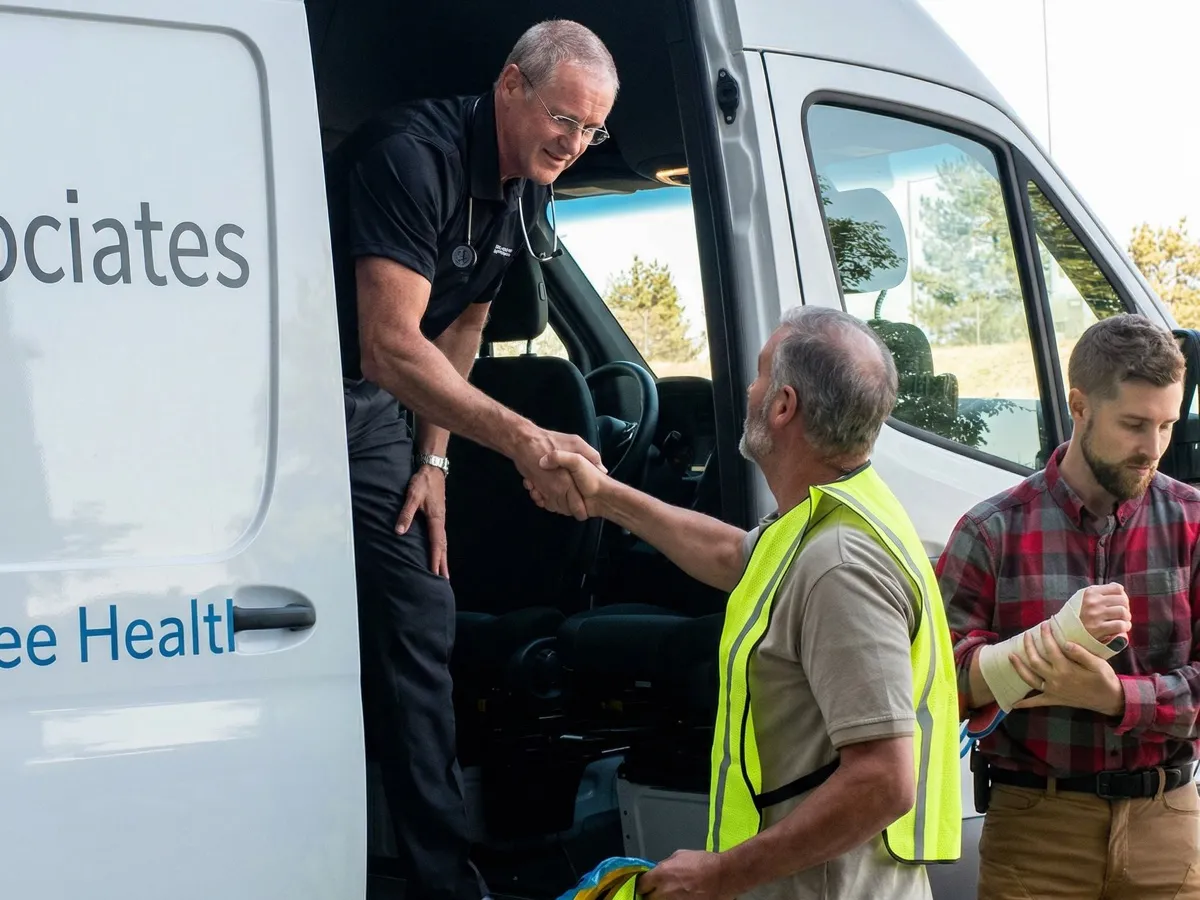
In most minor injuries the worker never leaves the site. Your supervisor makes one call; our team handles the rest.
One number reaches a Registered Nurse trained in assessing workplace injuries. Describe what happened and how the worker is doing.
6 a.m.–11 p.m., seven days a week, on every plan.
The nurse evaluates the situation over the phone and determines whether first aid is appropriate, or whether the worker should go to a clinic, urgent care or the ER.
Most minor injuries stay at the jobsite.
A Registered Nurse comes to your jobsite, evaluates the worker in person and provides first aid: wound care, splinting, eye irrigation, burn care and more.
2-hour target response.*
If more support is needed, the nurse consults an ICA physician and directs the worker to the right facility. Your safety team gets timely communication and incident-related records.
Physicians oversee care and are available for consultation as needed.
*2-hour response is a target, not a guarantee. Detailed response times are provided by the Registered Nurse when you call the triage line. Triage line hours: 6 a.m.–11 p.m., seven days a week, on every plan. 11 p.m.–6 a.m. is not covered; call 911 for urgent injuries.
The right level of care
Where a worker is treated changes the type, cost and duration of treatment. Our nurse’s first job is routing the injury to the right place, and most of the time that place is where the worker already is.
Most common
Cuts, scrapes, minor burns, strains, splinters, eye irritation. The nurse provides first aid at the workplace and the employee returns to work.
No trip, no waiting room, managed for OSHA recordability.
When more is needed
The nurse consults an ICA physician and, if needed, directs the worker to the nearest ICA clinic for evaluation and treatment, with the incident already documented. We order any imaging referral, follow up on the report and stay your authorized treating provider of record.
Warm handoff to occupational medicine, not a cold ER visit.
Serious injury
Severe bleeding, loss of consciousness, chest pain, major trauma. Call 911 or go to the nearest emergency department before calling us.
We follow up afterward to support return-to-work planning.
Contact us today
Tell us about your site and shifts. We’ll walk you through coverage, response times and how the triage line fits your safety protocol.
Why on-site is different
Each option has a role. For minor, first-aid-level injuries, on-site care removes the trip, the wait and the recordable.
| What you get | ICA on-site |
Other clinics |
Urgent care |
Hospital ER |
|---|---|---|---|---|
| Typical time away from work | Minutes; worker stays on site | Half a day | 2–4 hours | 4+ hours |
| Care delivered at your jobsite | ✓ | — | — | — |
| Registered nurse triage by phone | ✓ | — | — | — |
| OSHA-sensitive first aid (non-recordable where appropriate) | ✓ | ✓ | — | — |
| Occupational medicine physician oversight | ✓ | ✓ | — | — |
| Employer communication and incident documentation | ✓ | ✓ | — | — |
| Drug and alcohol testing at the jobsite | ✓ | — | — | — |
| Imaging and moderate-injury treatment | — | ✓ | ✓ | ✓ |
| Emergency and trauma care | — | — | — | ✓ |
Comparison reflects typical first-aid-level workplace injuries. Serious injuries belong at an urgent care or emergency department, and our nurse will tell you so.
Before the first injury
A subscription gives your site guaranteed availability and priority response. Services are billed per our standard fee schedule as they are used.