Medical care at no cost to you
For an accepted claim the carrier pays for treatment, therapy and follow-up, and for the imaging we refer out. No copay, no deductible, no balance bill.
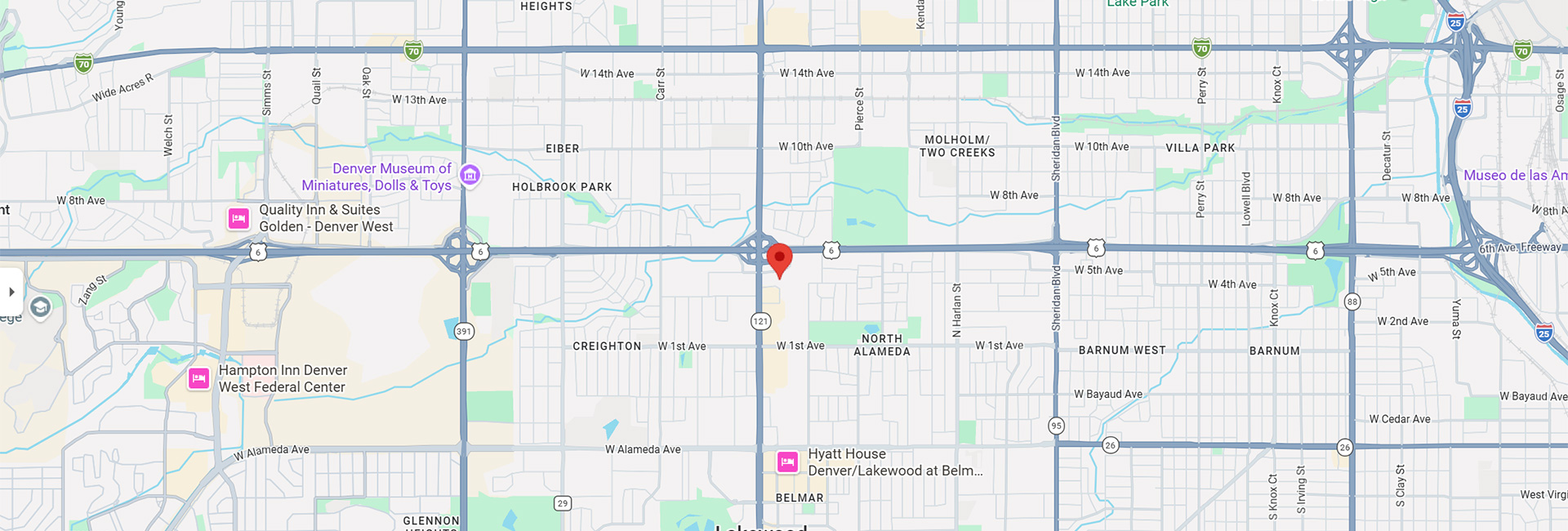
How billing worksSame-day work injury care, physical therapy, physicals and drug testing — now closer to West Denver employers and crews. Walk-ins welcome, no referral needed.
Colorado Workers' Compensation · Resources
Workers’ compensation pays for the medical care of an accepted work injury and replaces part of your lost wages — at no cost to you. Injury Care Associates is a designated workers’ comp provider with clinics in Denver, Lakewood, Thornton and Parker.
Show this page for
Step by step
Five steps. The first two are the ones that protect everything after them.
Life-threatening? Call 911 or go to the nearest ER. Otherwise walk into any ICA clinic the same day — no appointment, no referral.
Colorado asks for written notice within four working days. Date it, describe what happened, and keep a copy for yourself.
Your employer must hand you a written list of designated providers. Pick the one you want — if ICA is on it, you can choose us.
Your employer reports the injury to its carrier. The insurer then admits or denies liability within the state’s window.
Keep every appointment and follow your restrictions. We send updated work status to your employer the same day you’re seen.
The clock
Most claims go wrong on timing, not on medicine. These are the dates that affect your benefits.
4 days
Four working days from the injury. Late notice can cost up to one day of wage benefits for each day of delay.
7 days
Your employer owes you a written list of designated providers — at least four choices — within seven business days.
10 days
The First Report of Injury goes to the carrier within ten days. If nothing has happened, ask.
3 shifts
The first three days of lost time are unpaid unless you are out longer than two weeks — then they are paid back.
2 years
A claim must be filed with the Division within two years of the injury, with a limited extension for good cause.
About ⅔
Temporary total disability generally pays two-thirds of your average weekly wage, up to the state maximum.
For injured workers
What Colorado law guarantees you, and what ICA handles so you can focus on getting better.
For an accepted claim the carrier pays for treatment, therapy and follow-up, and for the imaging we refer out. No copay, no deductible, no balance bill.
How billing worksIf the injury keeps you off work past the waiting period, temporary disability benefits replace a share of your average weekly wage.
Wage benefit basicsCan’t drive yourself to a follow-up? ICA arranges and covers transportation — missing visits is what derails recoveries.
New injury transportationIf your employer is insured by Pinnacol, the first-fill card covers your medication immediately — no waiting on claim approval.
Pinnacol Rx cardYou pick your treating physician from your employer’s designated list. If you were never given a list, you may be free to choose your own provider.
Ask us about your listColorado law protects you from being punished for filing a legitimate claim. If you believe you were, contact the Division directly.
Division of Workers’ CompStandard of care
The Medical Treatment Guidelines are written by the Division of Workers’ Compensation so that every injured worker in Colorado receives high-quality, evidence-based care — and so that no insurer, employer or attorney can unduly influence the treatment you receive.
They were built by stakeholders on every side: medical providers, patients, employers, insurers, legal representatives and the Division itself. The goal is a recovery that gets you back to work safely, at a reasonable cost and in a reasonable timeframe.
Every Injury Care Associates provider knows these guidelines and treats to them — which means your care is driven by the medicine, not by the payer.
Common questions
In Colorado your employer or its insurer gives you a written list of designated medical providers, and you select your treating physician from that list. If no list was ever given to you, you may have the right to choose your own provider — ask us and we will walk you through it.
Your employer’s workers’ compensation insurance pays for all authorized medical care related to the work injury. You should never receive a bill for treatment on an approved claim. If one reaches you by mistake, call us before you pay it.
If your injury keeps you off work beyond the short waiting period, you may qualify for temporary disability benefits — generally a percentage of your average weekly wage, paid by the insurer up to a state maximum.
Care does not have to stop. You have the right to dispute a denial through the Colorado Division of Workers’ Compensation. ICA documents the medical side and provides the records your adjuster or attorney needs; for the legal process itself, contact the Division or a workers’ comp attorney.
Colorado law protects you from retaliation for filing a legitimate workers’ compensation claim. If you believe you were terminated because of a claim, contact the Colorado Division of Workers’ Compensation.
Most claims don’t require one. ICA handles medical billing and reporting directly with the insurer. If your claim is denied or disputed, or if you are being pressured about restrictions, consulting a workers’ comp attorney is a reasonable step.
Repetitive strain, hearing loss and exposure illnesses are covered too — they are handled as occupational disease rather than a single traumatic injury. Report it as soon as you connect the symptoms to your work, and bring what you know about the tasks or exposures involved.
Photo ID, your employer’s name and your supervisor or HR contact, the designated provider list if you were given one, and a claim number if one has been assigned. You do not need your health insurance card for a work injury.
This page explains Colorado's workers' compensation system in general terms and is not legal advice. Deadlines and benefit amounts change — confirm anything that affects your claim with the Division of Workers' Compensation or your adjuster.
Last reviewed: pending ICA verification.
Colorado Workers' Compensation · Resources
Colorado workers’ compensation sets hard deadlines for notice, provider lists and reporting — and the cost of a claim is usually decided in the first week. Injury Care Associates treats your employees, documents the claim, and keeps you compliant across Denver, Lakewood, Thornton and Parker.
Show this page for
Step by step
Five steps. Miss one of the written deadlines and a routine claim becomes an expensive one.
First aid, then transport. ICA can pick an injured employee up from your site and bring them to the nearest clinic.
Write down the date and time you learned of the injury. Every statutory clock in the claim starts from that moment.
Colorado requires a written list of designated providers — at least four options — delivered to the employee within seven business days.
File the First Report of Injury with your insurer inside the statutory window. Late reporting is penalized and weakens the defense.
Our restrictions are written against real job tasks, so you can put someone back to work instead of paying them to sit at home.
The clock
Penalties, disputed claims and experience-mod damage almost always trace back to a missed date, not to the medicine.
7 days
A written designated provider list — at least four choices, meeting state distance and independence rules — within seven business days of notice.
10 days
Report a lost-time injury to your carrier within ten days of notice. Late filing carries per-day penalties.
3 shifts
The first three days of lost time are unpaid — unless disability exceeds two weeks, at which point they become payable.
20 days
Once the claim reaches the carrier, it has a set window to file an admission or a notice of contest. Your documentation decides which.
2 years
An employee has two years from the injury to file, with a limited extension for good cause. Keep records that long at minimum.
3 years
Claims follow your mod for three policy years. Fast, well-documented care is the cheapest lever you have.
For employers
The compliance pieces that keep claims on track and your experience mod predictable.
We’ll help you build and maintain a list that meets current state rules, with ICA locations your crews can actually reach.
Build your listThe right forms, the real deadlines, and same-day written restrictions that hold up with the adjuster.
Injury reportingWe catch over-treatment, validate restrictions and close claims faster — without shortchanging the employee’s care.
How review worksColorado requires specific workers’ comp notices posted at every job site. Our compliant poster pack is free for ICA clients.
Request postersAuthorize care through the employer portal and your employee is treated on arrival instead of waiting at the front desk.
Service authorizationModified duty planning, functional testing and job-task matching, run by the same team treating the injury.
Return-to-work programStandard of care
The Medical Treatment Guidelines are the evidence-based standards written by the Division of Workers’ Compensation. They define what care is appropriate for a given injury and for how long — which is exactly what an adjuster or an ALJ measures a treatment plan against.
They were built by stakeholders on every side: medical providers, patients, employers, insurers, legal representatives and the Division. Treatment inside the guidelines is presumed reasonable; treatment outside them invites dispute, delay and cost.
Every Injury Care Associates provider treats to these guidelines — so restrictions hold up, over-treatment gets caught early, and claims close on schedule.
Common questions
Colorado requires a written list of at least four providers or corporate medical entities, delivered to the injured employee within seven business days of notice, with rules about distance and independence between the options. If the list is missing or non-compliant, the employee may choose their own physician — which is how employers lose control of a claim. We will help you build and maintain one.
Same day. Work status and written restrictions go out the day the employee is seen, described against real job tasks rather than generic limits, so your supervisors can act on them immediately.
Yes. Authorize through the employer portal or by phone and the employee is treated on arrival instead of waiting at the front desk while we track someone down.
Report it to your carrier anyway and let the insurer file the contest. Refusing care or delaying the report does not protect you — it adds penalties and makes the claim more expensive if it is later admitted.
Wage benefits generally do not start until lost time passes the waiting period. A valid modified-duty offer that fits the written restrictions keeps the employee on payroll and productive, shortens the claim, and limits the mod impact.
Our physician-led claims review looks at every ongoing claim against the Medical Treatment Guidelines — validating restrictions, flagging over-treatment, and identifying claims ready to close.
Colorado requires specific workers’ compensation notices at every job site, including designated provider information. Our compliant poster pack is free for ICA clients — ask your account contact.
Yes. Federally insured workers, including USPS employees, fall under FECA rather than Colorado law. ICA is OWCP-credentialed and bills through ECOMP directly.
This page explains Colorado's workers' compensation system in general terms and is not legal advice. Deadlines and benefit amounts change — confirm anything that affects your claim with the Division of Workers' Compensation or your adjuster.
Last reviewed: pending ICA verification.