Fewer injuries start before the first strain
Ergonomic assessments, job-demand analysis, and wellness programs delivered at your worksite by the same therapists who treat your injured workers.
- On-site at your facility
- Built from your injury data
- Delivered by licensed therapists
Programs
What we offer employers
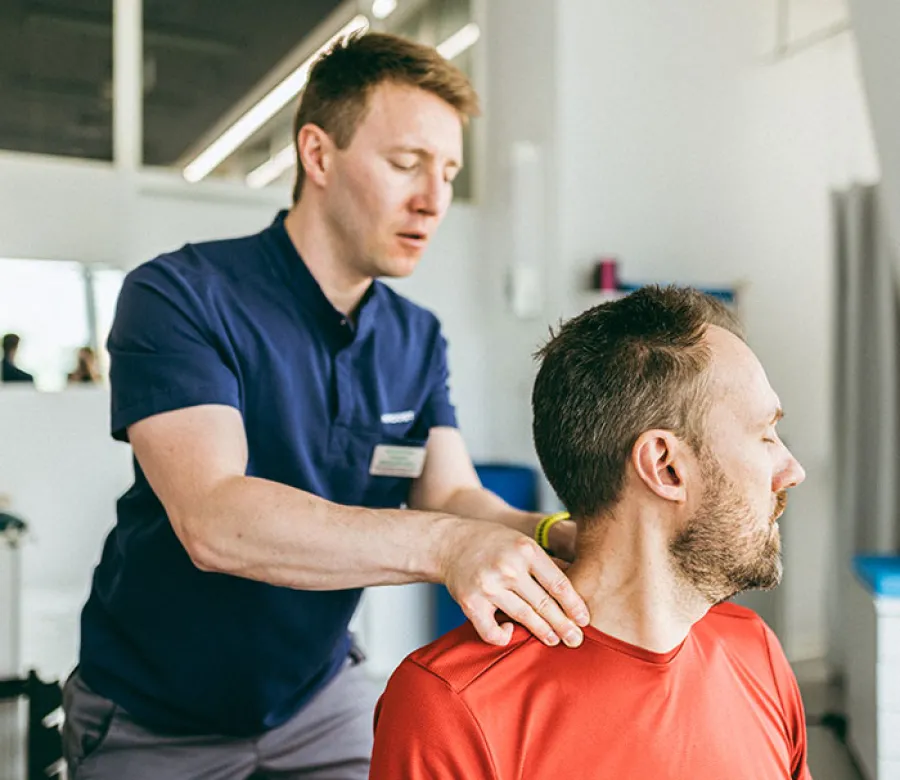
- Ergonomic workstation assessments
- Job demand analysis and physical demand levels
- Stretch-and-flex and warm-up programs
- Safe lifting and body mechanics training
- Early-symptom intervention (first aid level)
- Post-offer employment testing design
- Supervisor injury-response training
- Wellness screenings and health coaching
How a program comes together
From your injury data to a program on the floor
Most programs launch within 4–6 weeks of the first conversation.
- Week 1
Discovery
We review your OSHA logs, claims history, and highest-risk roles with your safety lead.
- Weeks 1–2
Worksite assessment
Therapists observe the work, measure demands, and identify the tasks driving injuries.
- Week 3
Program design
A written plan with specific interventions, schedule, and the metrics we will track.
- Weeks 4–6
Rollout
On-site training, stretch programs, and ergonomic changes, delivered on your shifts.
- Quarterly
Review
Injury rates, participation, and cost data reviewed against baseline; program adjusted.
Getting started
What the first consultation covers
The first meeting is a working session with your safety, HR, or operations lead, on site or by phone. We look at where injuries are happening, what has been tried, and what a realistic program looks like for your shifts and headcount.
You receive a proposal with scope, schedule, and pricing within a week.
Bring with you
- OSHA 300 log or injury summary for the last 1–3 years
- Job descriptions for the highest-risk roles
- Shift schedule and headcount by department
- Any prior ergonomic or safety assessments
Good to know
- A walk-through of the floor is the most useful part; plan for it.
- Include a frontline supervisor; adoption depends on them.
- Programs scale from one department to a whole site.

Why ICA
Why prevention from your injury-care clinic works better
We already know your injuries
The therapists designing your program treat your workers. They know which tasks send people to the clinic.
Licensed clinicians, not trainers
Ergonomic and body-mechanics guidance from physical and occupational therapists, grounded in how injuries actually happen.
Measured against your claims
Programs are reviewed quarterly against injury rates and claim costs, not attendance sheets.
Injury prevention, answered
General information, not medical or legal advice.
How small a company can use this?
Any size. A single ergonomic assessment or a one-hour lifting class is a reasonable starting point for a small crew; larger sites typically start with one high-risk department.
Do you come to our site?
Yes. Assessments and training are delivered where the work happens. Some planning meetings can be done by phone.
Is early-symptom intervention a medical visit?
No. It stays within OSHA first-aid definitions and is not recordable. If a worker needs treatment, we refer them to the clinic and the case is handled as an injury.
How do you measure results?
Against your own baseline: recordable injury rate, claim frequency and cost, and participation. We report quarterly.
Can training be done in Spanish?
Yes. Body-mechanics and stretch programs are delivered in English or Spanish, with bilingual handouts.
How long does a program run?
Most start with a 90-day pilot in one department, then continue quarterly or annually based on results.