Default option
The emergency room
A first-aid injury treated in an ER is an expensive, slow visit that often ends with a prescription — and a recordable case you did not need.
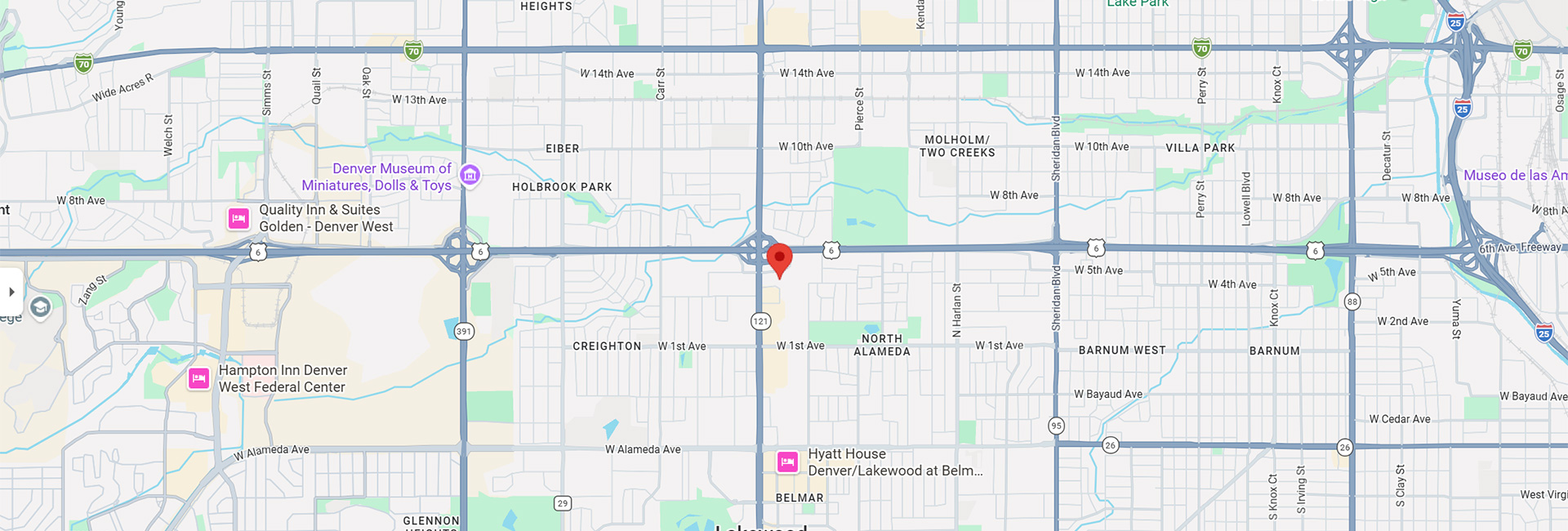
Same-day work injury care, physical therapy, physicals and drug testing — now closer to West Denver employers and crews. Walk-ins welcome, no referral needed.
Onsite servicesInjury & incident response
Your 6am start, your swing shift, your Saturday crew. Injuries don’t wait for the clinic to open — so our line is answered from 6am to 11pm, seven days a week.
The 5pm problem
After 5pm, an injured employee’s options collapse to two: go to the emergency room, or wait until morning and hope it’s fine. Both are expensive. One of them is how a first-aid case becomes a lost-time claim.
Default option
A first-aid injury treated in an ER is an expensive, slow visit that often ends with a prescription — and a recordable case you did not need.
Second option
Untreated overnight injuries get worse, and an incident documented twelve hours late is an incident your adjuster will question.
Real cost
Without a number to call, your shift lead is making a medical judgment at midnight with no training and no backup. That is where claims go sideways.
Hour by hour
Coverage runs 6am to 11pm, seven days, holidays included. What changes after the clinics close is who answers and where care comes from — not whether your crew gets it.
12am6am12pm6pm11pm
Who answers, where care happens
Early coverage
Coverage starts at 6am, an hour ahead of clinic hours, so 6am starts and pre-shift incidents are handled the same way a mid-morning one would be. Call, get triaged, get a nurse moving.
Clinic hours
Standard weekday operations. Call the triage line, get a decision, and the employee is treated on site, seen at the nearest clinic, or cleared to keep working — usually within the same shift.
Evening coverage
Clinics have closed, but the line has not. Evening calls get the same triage process, and on-site response runs through 11pm so second shift is not left choosing between the ER and waiting.
Weekend
Weekend work is where employers get surprised by ER bills. The 6am to 11pm window runs through the days your crews actually work, holidays included, so a Saturday laceration is handled the way a Tuesday one would be.
Outside coverage
Our coverage window runs 6am to 11pm. Outside it, urgent injuries go to emergency services and everything else waits for the line to open at 6am — when we pick the case up, document it, and get the employee seen the same morning.
Coverage runs 6am–11pm daily; response targets are set in your on-site plan. Life-threatening emergencies always go to 911 first, at any hour.
Built around your schedule
Clinic hours cover a fraction of the time your people are exposed. The 6am–11pm window covers most of the rest. Pick the pattern closest to yours.
The 2pm–10pm window where clinics close mid-shift.
6am gates, pre-shift inspections, and summer heat schedules.
Construction, utilities, and scheduled weekend production.
What we do — and honestly don’t do — between 11pm and 6am.
The 9pm decision
Same injury, same employee, same night. The difference is who your supervisor called.
Without coverage
With Care Beyond 9–5
Illustrative scenario. Actual care, timing, and recordability depend on the injury and the treating provider’s judgment.
What it changes
17
6am to 11pm, seven days — the same line, the same triage, the same people who already know your sites and your plan.
0
Shift leads stop deciding whether an injury needs an ER. They make one call and we name the level of care.
6am
The line opens at 6am. Evening cases come into the clinic when its doors open, with transportation arranged and the evaluation already written.
100%
A 10pm incident produces the same record as a 10am one — mechanism, findings, treatment, restrictions.
Common questions
Don’t see yours? Ask us and we’ll map coverage against your shift schedule.
6am to 11pm, seven days a week, holidays included. That covers early starts, the full swing shift, and weekend crews. Between 11pm and 6am we are closed: urgent injuries go to 911, and anything else is handled as soon as the line opens at 6am.
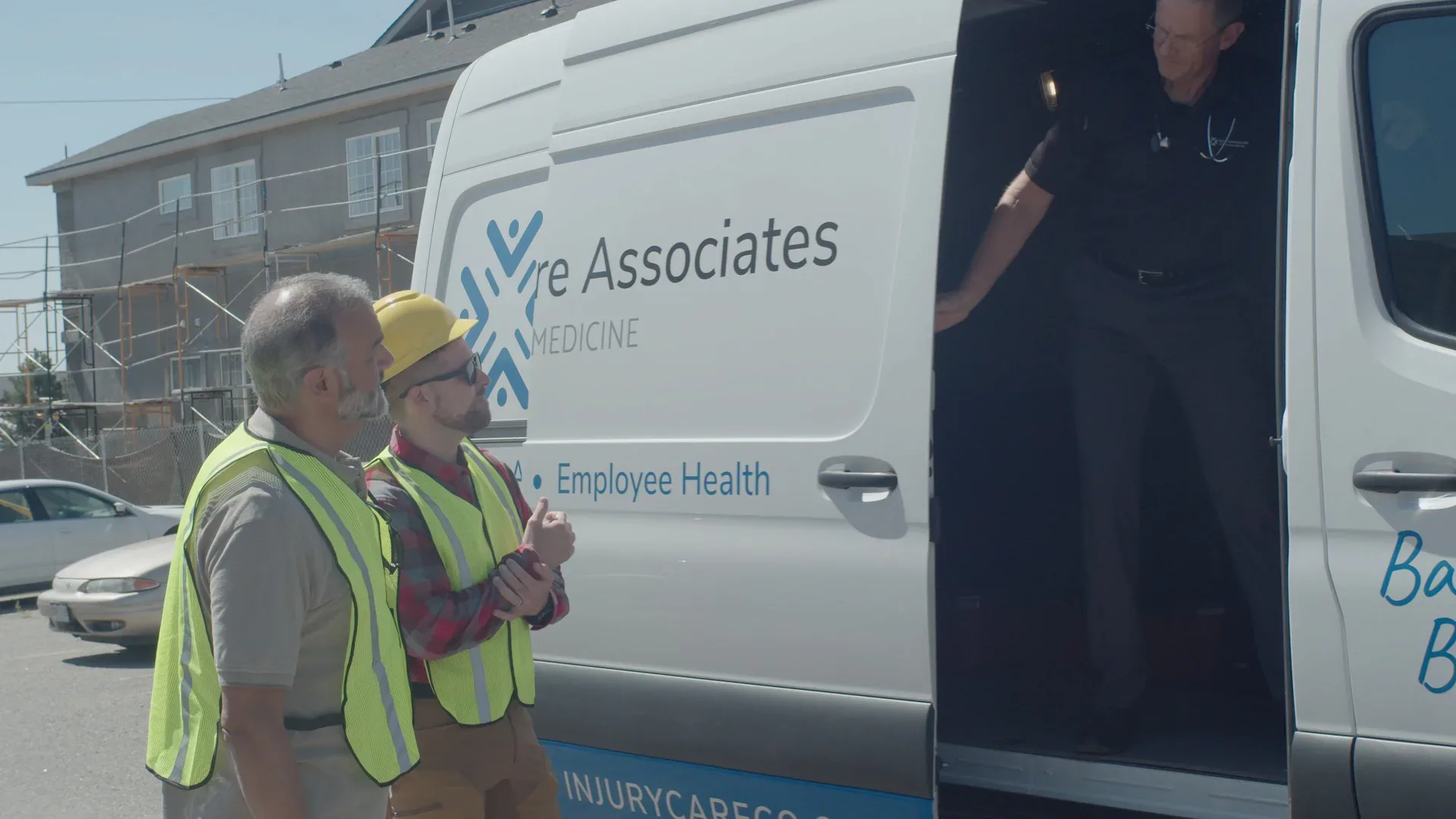
Yes. On-site response runs through the covered window, so a 9pm laceration gets a Registered Nurse at the job site rather than a trip to the emergency room. Response targets for your specific sites are confirmed when your plan is set up.
Call 911 first, every time. Loss of consciousness, uncontrolled bleeding, suspected spinal injury, chest pain, or major trauma go straight to emergency services. Call us second — we notify your designated contact and pick the case up from the hospital handoff.
After-hours availability is part of your subscription plan; services rendered are billed per our standard fee schedule. Compared with an emergency-room visit for a first-aid-level injury, the difference is usually not close.
We do, in advance. Every covered site gets a one-page protocol — the number, the hours, the questions we will ask, and what to do while help is on the way — plus training for supervisors on each shift, not just the day shift.
The same way daytime care does. Recordability depends on the treatment provided, not the hour. Our documentation states exactly what was done, so an after-hours case is as defensible on your log as a 10am one.
Get set up
Send us your shift schedule and site list. We’ll come back with a response target and the number your crews call at 9pm.