Occupational therapy for hand, arm, and daily-function injuries
Restore the fine-motor skills, grip, and coordination your job and daily life depend on, with therapists who specialize in the upper extremity.
- Upper-extremity specialists
- Custom splinting on site
- Coordinated with your treating physician
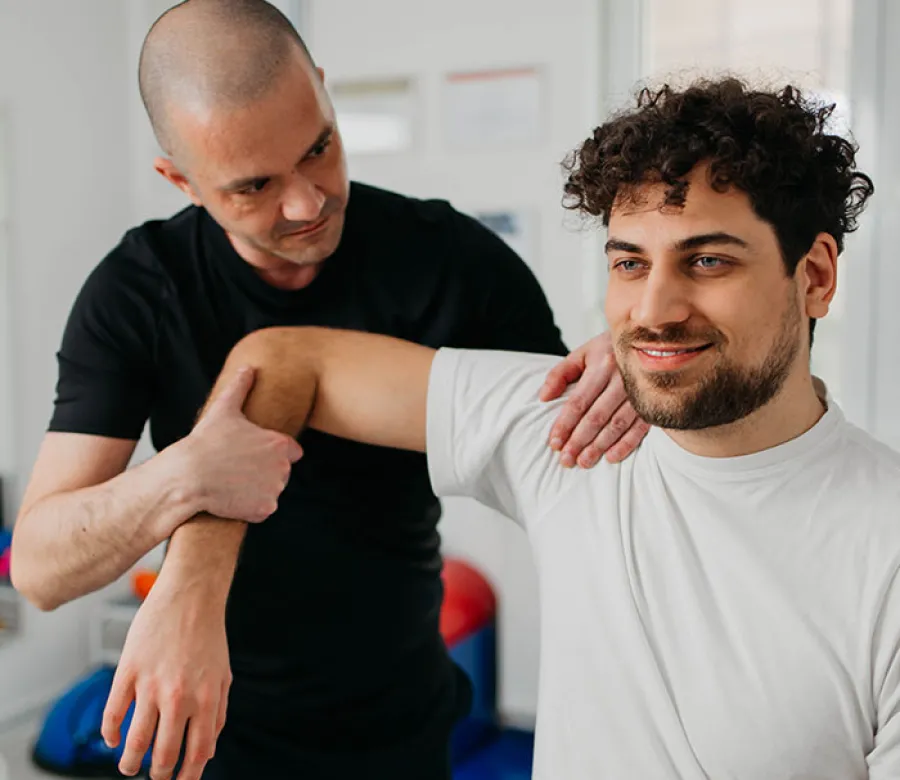
What we treat
Hand, wrist, and arm injuries we rehabilitate
- Carpal tunnel and nerve compression
- Tendon lacerations and repairs
- Hand and finger fractures
- Crush injuries and amputations
- Tennis and golfer’s elbow
- Trigger finger and tendonitis
- Burns and scar management
- Post-surgical hand rehabilitation
How care works
From evaluation to independent function
Timelines are typical; your therapist sets the plan with your treating physician.
- Visit 1
Evaluation
Grip, dexterity, sensation, and motion measured against the demands of your job and daily tasks.
- Week 1
Plan and splinting
Goals set with your physician; custom orthoses fabricated on site when protection is needed.
- Weeks 1–8
Active treatment
Edema and scar management, motion and strengthening, and task retraining.
- Every 2 weeks
Progress checks
Objective re-measurement; reports go to your physician, employer, and adjuster.
- Final visits
Return to work
Job-task simulation and a discharge summary supporting release.
Your first visit
What to expect at your evaluation
Your occupational therapist will review how the injury happened and what your job and daily routine require. Expect measurements of grip strength, pinch, sensation, and finger and wrist motion, followed by treatment or splint fabrication the same day.
You leave with a written plan and a home program.
Bring with you
- Photo ID and your claim or employer authorization
- Surgical notes or post-op instructions, if applicable
- Any splint or brace you currently wear
- A list of current medications
Good to know
- Remove rings and jewelry from the injured hand before you arrive.
- Tell us what you do with your hands at work, in detail.
- Bring your work gloves if grip or tool use is part of the job.
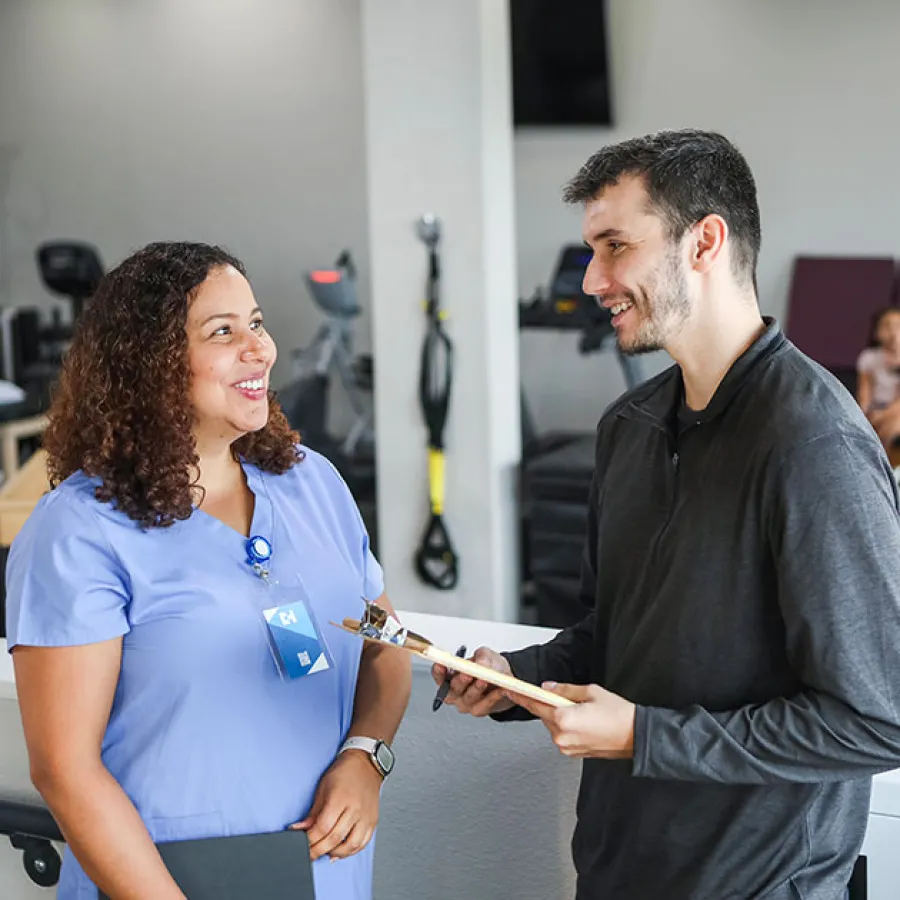
Why ICA
Why in-house occupational therapy matters
Specialists in the upper extremity
Hand and arm injuries need precise protocols, especially after surgery. Our OTs focus on exactly that.
Splints made the same day
Custom orthoses fabricated in the clinic, adjusted as swelling changes, without a separate vendor visit.
One record with your surgeon and physician
Post-op protocols and restrictions are followed to the day because everyone reads the same chart.
Occupational therapy, answered
General information, not medical or legal advice.
What is the difference between OT and PT?
Physical therapy focuses on strength, mobility, and movement, often for the back, shoulders, and legs. Occupational therapy focuses on the hand and arm and on regaining the fine-motor skills needed for work and daily tasks. Many patients are referred to one or the other based on the injury.
Do you make custom splints?
Yes. Our therapists fabricate and adjust custom thermoplastic orthoses on site, and can modify them as swelling changes.
How soon after surgery does therapy start?
It depends on the repair. Tendon repairs often begin within days; fractures after fixation typically start once the surgeon clears motion. We follow your surgeon’s protocol.
Who pays for therapy?
On an accepted workers’ compensation claim, the employer or their insurer covers authorized therapy.
Will I need to wear the splint at work?
Often, at least early on. Your therapist sets the wear schedule with your physician and notes it on your work-status form so your employer knows what to expect.
Can I keep working during OT?
Usually, with one-handed or lifting restrictions. Your therapist can suggest tasks you can do safely while the hand heals.