Key takeaway: Same-level falls on snow and ice are among the most frequent — and most preventable — winter workplace injuries, and the majority happen in the most boring places: parking lots, entry walkways, and loading docks during the first hour of a shift. Prevention is a system, not a salt bucket: a written snow-and-ice plan with assigned responsibility, traction footwear where exposure is real, and treated, designated walking routes people actually use.
This playbook is for Colorado facility managers, safety leads, and employers heading into the freeze-thaw season — which along the Front Range famously delivers ice, melt, and refreeze in the same afternoon.
Where Winter Falls Actually Happen
Map last winter's incidents and near-misses and a pattern appears: the gap between the car and the door. Parking surfaces, curb cuts, building entries (where tracked-in melt makes interior tile as slick as the lot), exterior stairs, and dock edges. Colorado's freeze-thaw cycle is the multiplier — midday melt refreezing into evening black ice, especially in shaded strips that never see sun. Your highest-risk hour is shift change in the dark.
The Snow and Ice Plan (Write It Down)
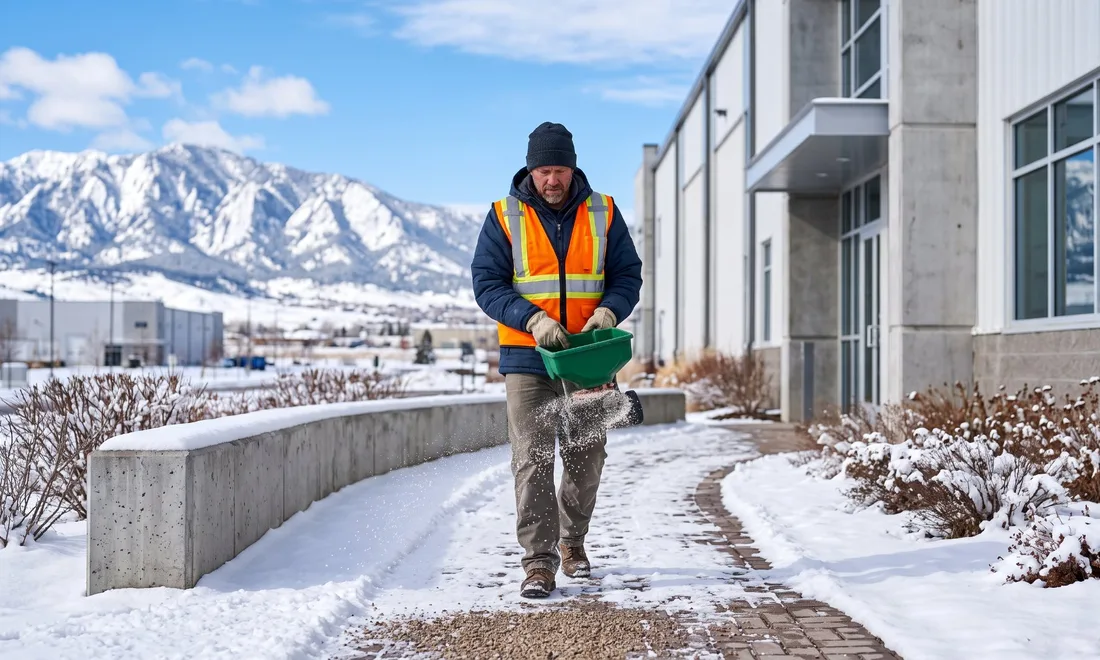
- Assign ownership by name and hour. Who treats surfaces before first shift? Who monitors refreeze at shift change? A contract plow at 5 a.m. doesn't cover the 3 p.m. melt.
- Pre-treat before storms; log every treatment. The log is both a quality tool and your documentation if a claim or third-party injury turns into a dispute.
- Designate and maintain walking routes. Concentrate treatment on marked paths from parking to entries — and make the treated path the short path, or people will cut across the ice. Cones and signage redirect; barriers enforce.
- Attack the transition zones. Absorbent walk-off mats at every entry, long enough to actually dry shoes; a mop-and-wet-floor-sign protocol owned by someone specific.
- Light it. Black ice in a lit lot is visible; in a dark lot it's a claim. Check fixtures before the season, not after the incident.
Footwear: The Control Workers Carry With Them
For employees with sustained outdoor exposure — yard crews, drivers, meter readers, dock workers — a traction footwear program (winter-rated soles, or strap-on ice cleats for ice work) is cheap insurance. Two rules make cleat programs work: train that cleats come off indoors (they're dangerously slick on smooth floors — the program shouldn't relocate the injury), and provide them free; a $30 pair of cleats argues with nobody after the first prevented fall. For everyone else, a seasonal reminder about footwear choice beats nothing.
Teach the Walk (Yes, Really)
Brief, slightly comic, and effective toolbox talk: short steps, feet flat, knees soft, lean slightly forward, hands out of pockets — the penguin walk. Add the behavioral rules: use the treated route, use handrails, three points of contact getting out of vehicles and trucks (vehicle exits are a quiet winter claim source), and report icy spots like the hazard they are. [POSTER ASSET — pair with Request Posters page]
When Someone Goes Down Anyway
Most winter falls produce wrist, shoulder, hip, ankle, and tailbone injuries — same-day evaluation at an occupational clinic sorts the bruise from the fracture and starts documentation properly. Treat any head strike seriously: a worker who hit their head needs evaluation even if they feel fine, and urgently so if they're on blood thinners, lost consciousness, vomits, or seems confused — when in doubt, emergency care. [CLINICIAN REVIEW] Then run the standard play: [LINK: first 24 hours after a workplace injury].
Where ICA Fits In
Same-day evaluation for winter falls — X-ray-supported assessment, work-status reports, and Colorado comp documentation — plus help building the prevention side into your [LINK: injury prevention program]. [LINK: Locations]
FAQ
Are we liable for an employee falling in our parking lot before clocking in? Injuries in employer-controlled lots arriving for work frequently fall within workers' comp — specifics vary by circumstances. Treat the lot as part of the workplace; it largely is. [COMPLIANCE VERIFY]
Ice cleats indoors — really that big a deal? Yes. Metal studs on polished concrete or tile are skates. Build the on/off habit into the program with a bench and signage at the entry.
What about employees working from heights in winter — ladders, roofs? Different and bigger hazard class: ice multiplies fall-from-height risk and warrants its own controls (postpone, de-ice, fall protection). This article covers same-level falls; don't stretch it further.
General information, not medical or legal advice.
[Medically reviewed by — REQUIRED] · Last reviewed: [DATE]