Key takeaway: Hand and finger injuries sit at or near the top of every trades claim list — lacerations, crush injuries, pinch-point fractures, and amputations. Three controls do most of the prevention: machine guarding and lockout actually used (jams and cleaning cause a brutal share of the worst injuries), the right glove for the task — including knowing when gloves are the hazard — and a hard rings-off rule. And if a fingertip or finger is ever amputated, the first aid in the first minutes materially affects whether it can be reattached.
This guide is for tradespeople and the supervisors who run their sites.
Where Hands Get Hurt: The Big Four
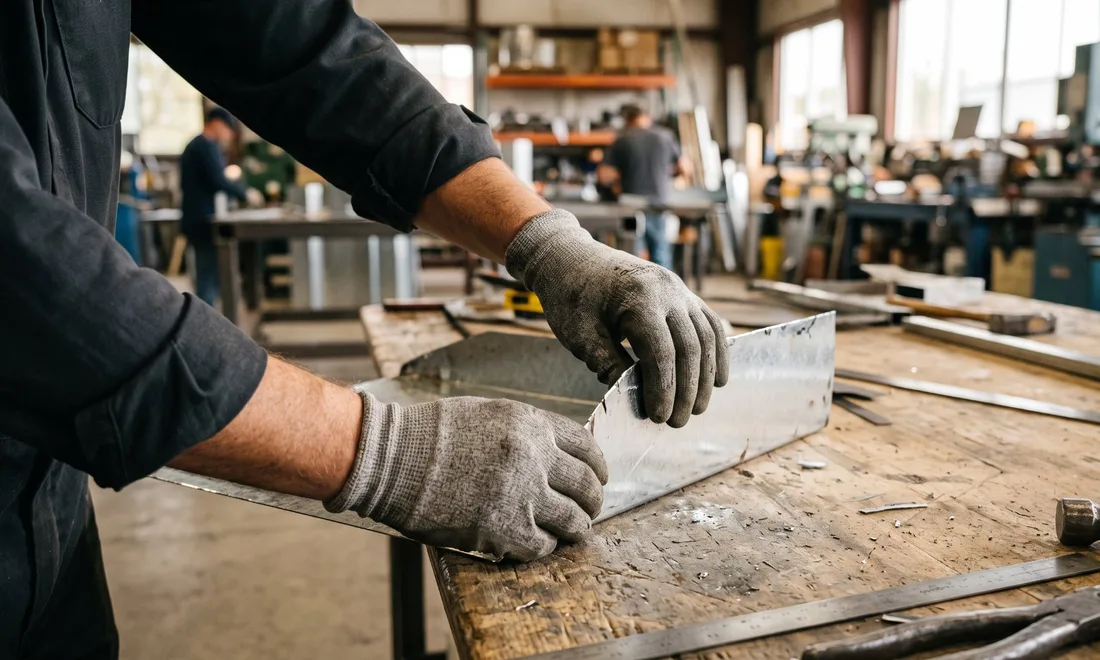
- Blades and sharp edges — utility knives top the laceration list, usually dull blades forced, cuts pulled toward the body, or the wrong knife for the task
- Pinch points and crush — material handling, hitches, gates, dies, rolling stock: the hand placed where two things meet
- Powered equipment — saws, grinders, presses, augers; the worst events cluster around clearing jams and cleaning with the machine live
- Caught jewelry — a ring catching on a ladder rung, fence, or moving part causes degloving injuries surgeons describe with words we won't print
The Controls, In Order of How Much They Matter
1. Lockout before reaching in. Every jam, every time. The five-second jam clear with the machine live is the signature mechanism behind trade amputations. The rule has no exceptions, and supervisors set it by what they tolerate, not what's posted.
2. Guards stay on. A guard removed "just for this cut" is a hand bet at machine odds. Damaged or missing guards get reported and fixed, not worked around.
3. The glove rule everyone gets backwards. Gloves are task-specific PPE, not a universal good: - Cut-rated gloves (ANSI/ISEA cut levels — match the level to the blade/edge exposure) for handling sheet, glass, banding, blades [VERIFY current standard reference] - Impact-protective gloves for hitching, rigging, material handling pinch exposure - Chemical-rated gloves matched to the specific chemical — leather soaks solvents straight to skin - NO gloves near rotating equipment — drill presses, lathes, grinders with exposed rotation: a glove that catches pulls the hand in. Bare, close-fitting, or per the machine's manual. Teach this explicitly; it contradicts the "always glove up" instinct.
4. Blade discipline: sharp blades (dull blades force, forced blades slip), cut away from the body and the off-hand, self-retracting knives where the work allows, and a blade-change routine that doesn't involve pliers and hope.
5. Rings off, period. On a chain, in the pocket, in the locker. Pair with no loose sleeves or dangling cords near rotation.
6. Eyes on the off-hand. Most laceration training watches the tool hand; most lacerations happen to the hand holding the material. Position it out of the line of cut — behind the blade path, never below it.
First Aid: Minutes That Decide Outcomes
Serious laceration: direct pressure with clean dressing, elevate, don't peek every thirty seconds; pressure not tourniquet for almost all hand bleeds; get evaluated — hand lacerations hide tendon and nerve injuries behind "it's not that deep," and same-day proper closure beats next-day infected closure. [CLINICIAN REVIEW]
Amputated fingertip or finger — do this exactly: 1. Control bleeding on the hand with direct pressure; call 911 / go to the ER 2. Recover the part. Wrap it in clean, slightly moist gauze 3. Seal it in a plastic bag, and put the bag on ice water 4. Never put the part directly on ice, in water, or in anything other than the wrapped bag — direct ice contact damages tissue and can end reattachment chances 5. The part travels with the patient [CLINICIAN REVIEW protocol]
Crush without open wound: ice, elevate, and get imaged same day — crush fractures and compartment injuries don't always look like much from outside.
Where ICA Fits In
Same-day evaluation and treatment of work-related hand injuries — laceration repair, imaging-supported crush and fracture assessment, work-status documentation, and referral coordination when a hand specialist is needed. [VERIFY scope of in-clinic laceration/imaging services] Hands are also where [LINK: modified duty] earns its keep: one-handed transitional assignments keep a stitched-up worker on payroll and recovering. [LINK: Injury care] · [LINK: Locations]
FAQ
Which cut-level glove should we buy? Match the ANSI cut level to the actual exposure — heavier isn't automatically better, because gloves people find clumsy come off. Stock two levels: an everyday and a high-exposure. [VERIFY standard citation]
Are cut gloves required by OSHA? OSHA requires hand protection where hazards warrant it (29 CFR 1910.138) and leaves selection to the hazard assessment — which means your written assessment, not the catalog, is the compliance document. [COMPLIANCE VERIFY]
A finger got slammed but moves fine — clinic or wait? Same-day if there's significant swelling, deformity, nail-bed bleeding, numbness, or pain on motion. "It moves" doesn't exclude fracture, and untreated finger fractures heal crooked permanently.
General information, not medical advice. For severe injuries call 911.
[Medically reviewed by — REQUIRED] · Last reviewed: [DATE]